
Chemical resistance to common cleaning agents
Introduction
Axis devices can be installed in environments where regular cleaning is required. This white paper presents the testing that Axis has conducted to verify that devices can withstand cleaning with chemical agents. Based on these tests, we define chemical cleaning classes that specify which type of cleaning is suitable for a device.
Recommended cleaning
Recommended cleaning procedures involve using a soft cloth to wipe device surfaces. If you need to use a spray-based cleaning agent, you should spray on a cloth and wipe the device with the cloth – don’t spray directly on the device. After cleaning, wipe down the device surfaces with a water-dampened cloth to remove any residual cleaning agents.
It’s up to the user to ensure that the cleaning agents they use are based on the recommended chemical compositions and don’t contain substances that can have a negative effect on the device.
Chemical resistance tests at Axis
Chemical degradation is a complex phenomenon influenced by multiple factors, including chemical composition, exposure time, temperature, and the level and type of mechanical stress that the material is subjected to.
To ensure reliable performance under realistic conditions, materials are evaluated under representative end-use conditions. Chemical resistance is verified through two in-house test methods: environmental stress cracking tests (ESC tests) and cleaning simulations.
The purpose of the testing is to ensure that materials used in device casings, windows, and domes withstand repeated and regular exposure to chemical cleaning with a soft cloth. No adverse chemical interaction between materials and cleaning agents shall occur. Long-term repeated exposure shall not compromise the mechanical integrity or surface properties of the materials.
Environmental stress cracking tests
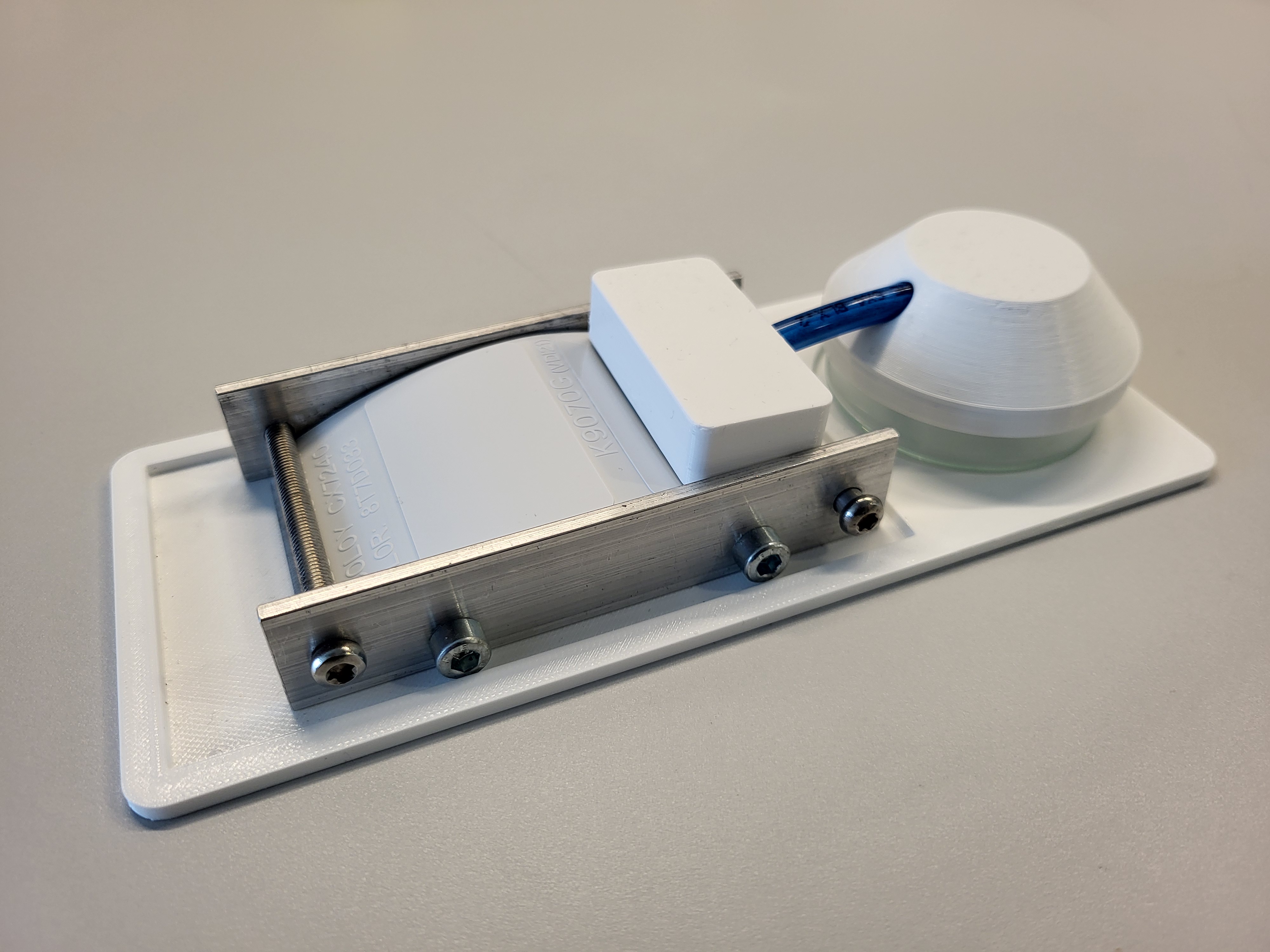
To find materials suitable for devices that need to be frequently cleaned, materials are evaluated using environmental stress cracking tests (ESC tests).
In an ESC test, a test sample of the material is subjected to mechanical stress in combination with simultaneous exposure to the selected chemical. During the test, the sample is periodically controlled for cracks, color changes, and other defects. After completed testing, the sample is again evaluated for material degradation.
Our ESC testing is conducted with a setup based on established industry standards. The tested parts are exposed to the same level of mechanical stress as required according to the standard.
Cleaning simulation
Cleaning simulation testing is conducted to replicate repeated cleaning over many years of device usage.
Specimens that represent device casings, windows, and domes are mounted in automated test equipment that applies repeated wiping cycles using a soft cloth saturated with the selected chemical. The wiping is performed under controlled pressure representative of typical manual cleaning conditions, and the cloth is resaturated regularly. Specimens are subjected to 200–5500 cycles, depending on device application. 5500 cycles corresponds to daily cleaning over a period of five years.
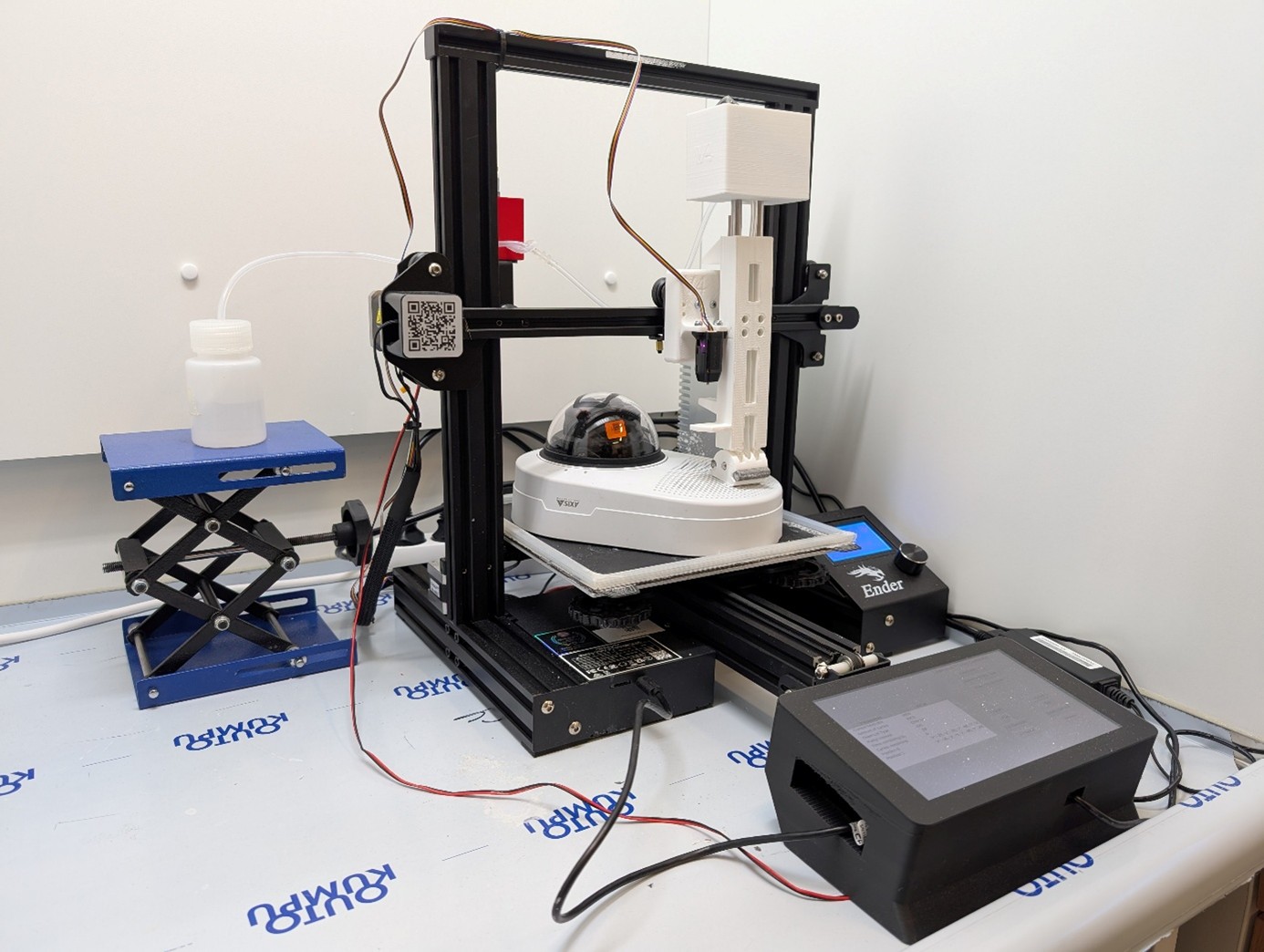
After completed testing, the samples are evaluated for scratches, cracks, discoloration, wear of logotype, and other defects.
Chemical cleaning classes
A device’s chemical cleaning class defines which type of cleaning is recommended. The classification is aligned with the chemical resistance testing conducted to verify device compatibility.
| Class | Cleaning type | Cleaning cycles | Typical environments |
|---|---|---|---|
| CC-D | Disinfection | 5500 | Medical facilities, laboratories |
| CC-G | General cleaning | 200 | Office buildings, stores, urban areas |
Class CC-D covers disinfectant cleaning commonly used in medical facilities and laboratories.
Class CC-G covers general cleaning typically performed on devices installed in common areas such as building facades, stores, warehouses, urban areas, and highway environments.
A device can belong to one or more cleaning classes depending on its design and intended installation environment.
Appendix
Chemical agents used in testing
The following chemical agents are used in Axis chemical resistance testing.
Disinfection cleaning agents
Isopropanol (C₃H₈O), 70%
Hydrogen peroxide (H₂O₂), 3%
Sodium hypochlorite (NaClO), 5%
Acetic acid (CH₃COOH), 10%
Peracetic acid (CH₃CO₃H), 0.12%
General cleaning agents
Mild detergent