
Onboard cameras
Introduction
Axis onboard cameras are purpose-built for installation in a wide range of vehicles, including trains, trams, buses, trucks, emergency vehicles, mining equipment, and other moving assets that demand resilient technology. These cameras are designed to perform in unique and challenging conditions, adhering to stringent industry standards and regulations that govern their installation in rail and road vehicles.
This white paper provides a concise overview of the technical aspects of Axis onboard cameras. We outline the key characteristics, essential considerations, and robust cybersecurity layers necessary for optimal onboard performance.
Surveillance in vehicles
Vehicle monitoring solutions are increasingly used to enhance passenger and operator safety, prevent crime and vandalism, and provide valuable evidence. Onboard cameras enable real-time monitoring as well as post-incident analysis to safeguard staff, passengers, vehicles, and equipment.
To ensure excellent image quality in onboard environments, cameras need to withstand severe vibrations over long periods of time, be reliable concerning power supply and data transfer, and perform regardless of light conditions. These demands apply to devices used in both rail traffic and road traffic but regulatory requirements typically differ between rail and road. There can also be regional variations. Meeting the regional standards for fire safety and electromagnetic compatibility is, of course, essential.
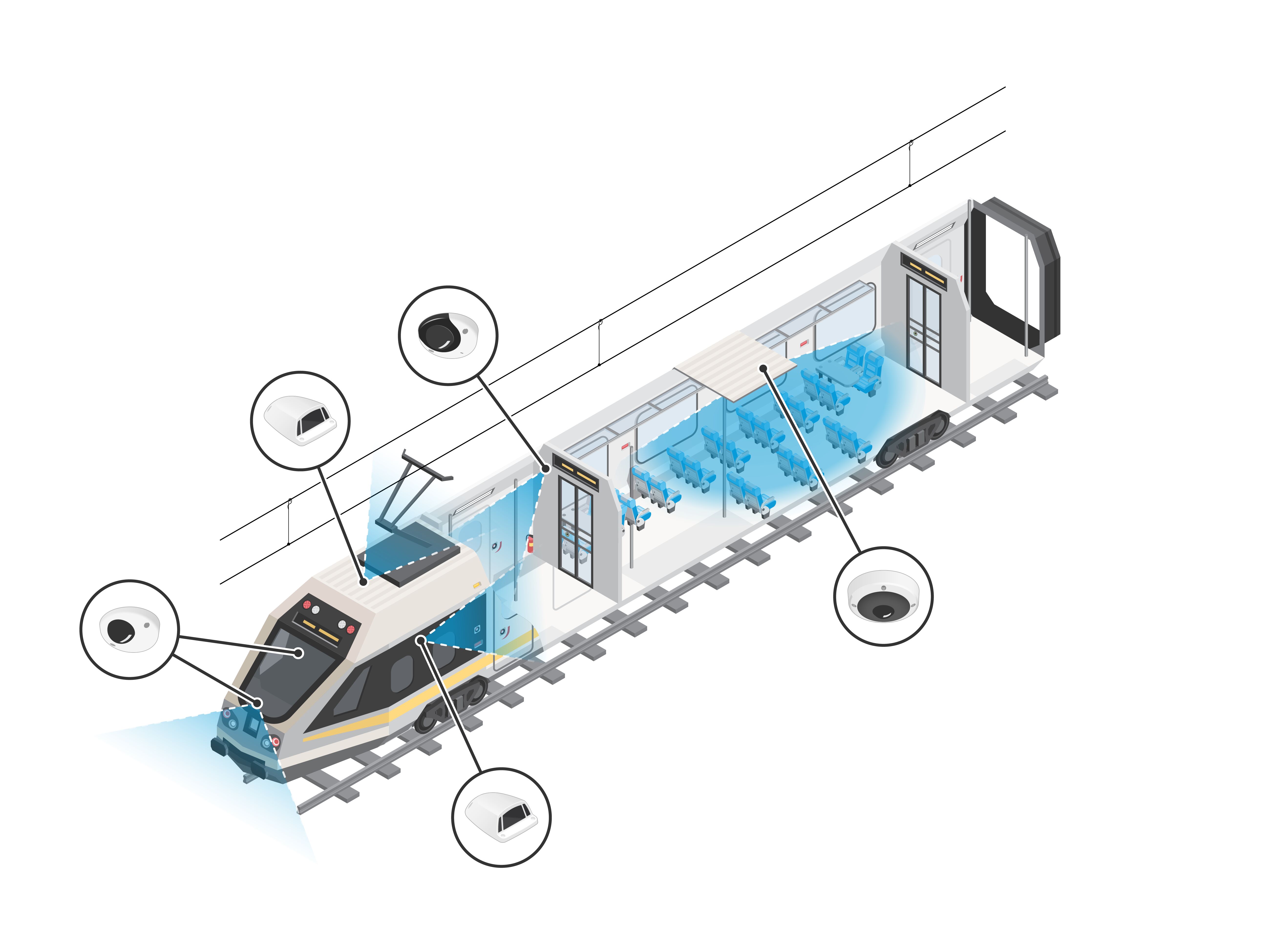
The ruggedized train cameras from Axis are designed to withstand shock and vibration (complying with the standard EN 50155) and comply with fire regulations, such as EN 45545-2 and NFPA 130. We have both indoor and outdoor dome cameras with several lens options available for customized needs.
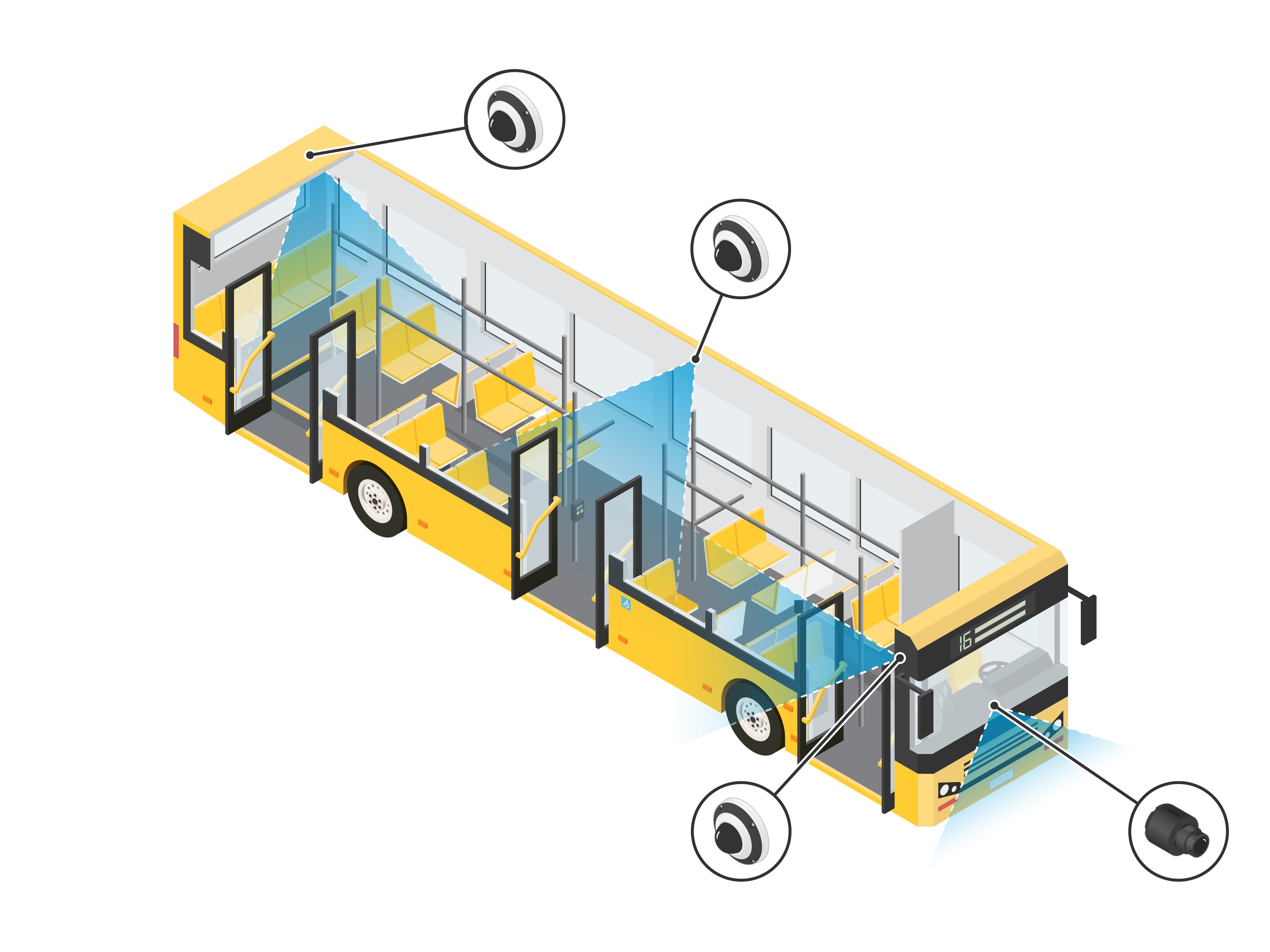
Axis cameras for buses also offer several lens options. When used together with outdoor-rated housings, these cameras can withstand tough weather and even be installed on the outside of a bus.
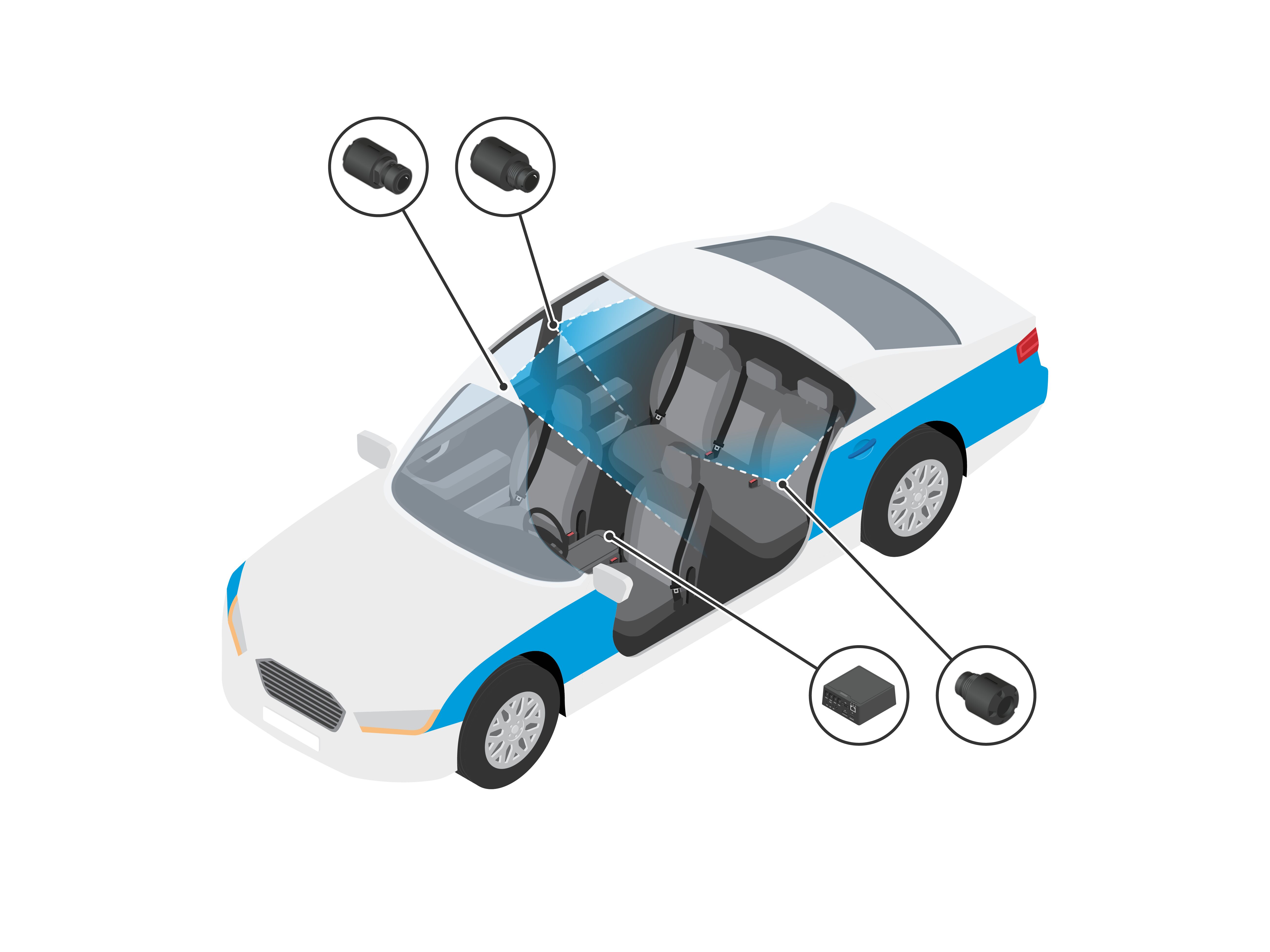
Axis modular cameras offer flexible installation and can be mounted in other vehicles such as ambulances, security vehicles, or trucks. Based on a divided camera concept, the main unit, sensor, and cable are chosen based on individual needs for a fully modular system.
Key considerations for onboard cameras
Onboard environments require cameras to withstand temperature fluctuations, vibrations, and electromagnetic interference. Furthermore, light conditions can be varying and challenging, and typical scenes are complex and dynamic.
An onboard camera typically has:
Robust housing (often metal)
Durable components and connectors
Wide temperature tolerance
Resistance to dust, water, and shock (IP and IK ratings)
Vibration resistance (rugged design)
Onboard cameras should achieve environmental ratings that ensure adequate protection, use vibration-secured connectors and technologies for handling challenging light. Ideally they should also be vandal-resistant and have tampering alarm functionality. In many environments, small and discreet cameras are preferred.
Light conditions
Onboard cameras must be able to adapt to varying light conditions. With very challenging light conditions such as low light, flickering light, or intense backlight you need cameras with special techniques to handle it.
Axis cameras employ WDR techniques with unparalleled ability to make details visible in the dark parts of a scene without over-exposing the bright parts. Read more about WDR techniques at whitepapers.axis.com/wide-dynamic-range
Lightfinder captures full-color images in extremely low light. Read more about Lightfinder at whitepapers.axis.com/lightfinder
With traffic light mode, a camera can distinguish the color of traffic lights in dark scenes.
Busy scenes
Analytics can provide valuable insights and help you monitor passenger flow and optimize boarding processes. With third-party analytics you can also monitor occupancy or left-behind items.
However, implementing analytics in onboard cameras is complex. The environment presents unique challenges, such as constantly moving scenes due to the ever-changing view through the windows of a vehicle in motion. Crowds and vibrations also contribute to extremely dynamic scenes. A vehicle’s typically low ceiling can introduce additional challenges for analytics, and if the camera is installed on the outside of the vehicle, weather conditions add to the complexity.
Before you deploy analytics solutions in onboard cameras it’s essential that you test and validate them for the intended use.
Vibrations
The term rugged or ruggedized is used about Axis onboard and modular devices to describe their endurance and stability over time in high vibration environments, such as inside vehicles or inside or close to machinery. Rugged devices are constructed to keep operating in these challenging conditions for the entire lifetime of the product.
Onboard cameras are designed with robust mounting systems, flexible connections, and components that can absorb shocks and vibrations. This ensures that the camera remains functional and continues to capture high-quality images despite the challenges of rail or road travel.
M12 network cable connectors offer a secure connection more resistant to vibrations than traditional RJ45 connectors. The threaded design of an M12 connector ensures a tight fit, crucial in high-vibration environments where traditional connectors might loosen over time. The internal design is also different from that of an RJ45 connector.
In modular cameras for onboard applications, SMA-FAKRA connectors are used on the cable between main unit and sensor unit to withstand vibrations and ensure a ruggedized installation.
IP rating
Most onboard cameras are IP66/67 rated, which ensures protection against dust and water. This does not mean that they’re outdoor rated.
Outdoor-rated Axis cameras can instead be identified by the “-E” in their product name, meaning that they’re outdoor-ready out of the box without needing any additional housings. They fulfill specific requirements including being made with UV-resistent materials and withstanding humidity with minimal interior condensation.
Most onboard cameras are not intended for outdoor use. A camera on the outside of a vehicle, such as a train, is exposed to more extreme vibrations and wind conditions than most outdoor cameras.
Power
Onboard cameras need reliable power supply. Axis onboard cameras are powered by PoE (Power over Ethernet), eliminating the need for separate power cables. The switch powers the devices, while consuming minimal power itself. PoE simplifies installation and reduces downtime.
Integration
All Axis video products have an application programming interface (API) called VAPIX®. VAPIX enables developers to easily integrate Axis video products and their built-in functionalities into other software solutions. This means that the cameras can be integrated into, for example, specific video systems used in rail or road traffic management. All Axis cameras are also compliant with ONVIF®, which provides interoperability between network video products regardless of manufacturer.
Electromagnetic immunity
Onboard environments can put cameras to the test regarding susceptibility to electromagnetic interference (EMI) and the camera’s ability to operate reliably in the presence of strong electromagnetic fields. Railway applications involve numerous sources of EMI, including radio-frequency signals from communication systems and electromagnetic pulses generated by traction motors and other electrical equipment.
To meet this requirement, onboard cameras incorporate EMC design principles, such as shielding (using metal enclosures or shielding materials to reduce electromagnetic radiation), filtering to suppress unwanted frequencies and prevent interference, and proper grounding of the camera's electronics to prevent electrostatic discharge.
Field of view
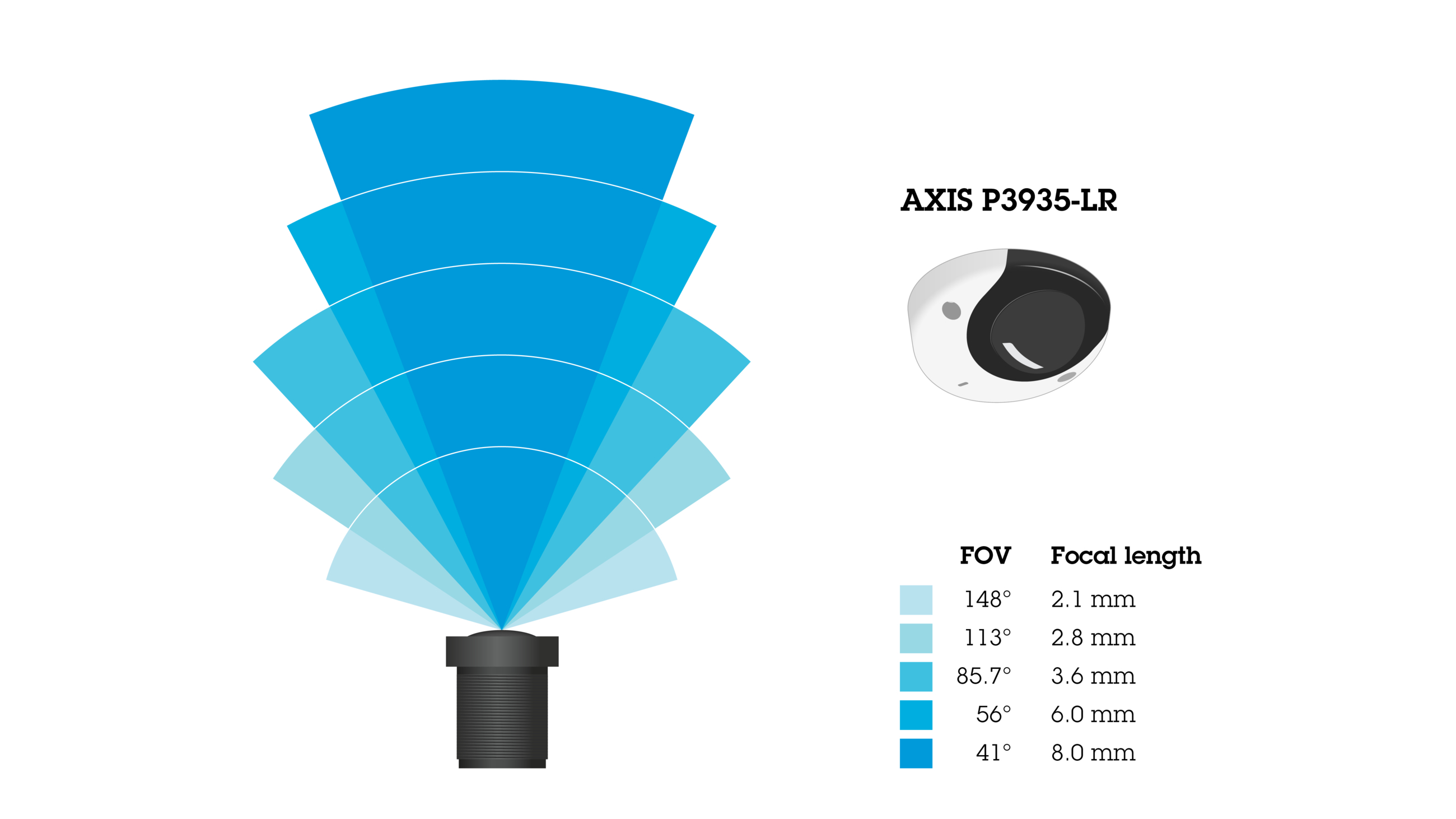
Onboard cameras offer a range of field-of-view options to ensure comprehensive coverage.
Panoramic cameras provide wide overviews that are ideal for general surveillance.
Small dome cameras or modular cameras offer flexibility in placement and aesthetics.
Exchangeable lenses allow for adjusted field of view, adapting to specific monitoring needs, such as focusing on a driver’s door. Axis onboard cameras allow you to change lenses to find your optimal field of view.
Cybersecurity
Cybersecurity is especially important with onboard cameras, as they are often installed in places that are physically accessible to the public. There are potential risks associated with cameras serving as entry points into larger networks, and the primary concern is to prevent unauthorized network access.
Robust security measures protect Axis onboard cameras against cyber attacks and maintain the integrity of the network. Examples include:
Providing regular device software updates and security patches.
Implementing secure authentication methods and encryption.
Adhering to industry standards and best practices.
Offering network protection features, such as access control and secure protocols.
Continuously monitoring and improving security measures.
Providing guidelines and resources for secure installation and configuration.
Read more about cybersecurity in Axis products at www.axis.com/about-axis/cybersecurity
Certifications
Axis is committed to delivering products that not only meet but exceed industry standards, regulations, and certifications. Our rigorous adherence to these benchmarks ensures that our solutions are reliable, secure, and of the highest quality.
Our onboard cameras comply with the same standards and regulation as our other cameras, but also with industry-specific standards to ensure safe and reliable operation in various transportation environments.
Important certifications or standards for onboard cameras include:
EN 50155 (Railway applications — Electronic equipment used on rolling stock)
Ensures that electronic equipment, such as onboard cameras, can withstand the harsh environmental conditions found in railway applications. This concerns, for example, vibrations at commonly found vibration frequencies, electromagnetic interference (EMI), and the presence of strong electromagnetic fields-.EN 45545-2 (Railway applications — Fire protection on railway vehicles)
Focuses on the fire safety aspects of onboard equipment, ensuring that it doesn’t contribute to the spread of fires or release hazardous substances.UN ECE R118 (Burning behavior of materials used in the interior construction of certain categories of motor vehicles)
Focuses on fire safety in road vehicles such as buses, more specifically evaluating the fire behavior and fuel repellency of materials and components used in bus interiors.NFPA 130 (Standard for Fixed Guideway Transit and Passenger Rail Systems)
Specifies fire protection and life safety requirements for underground, surface, and elevated fixed guideway transit and passenger rail systems.