
Lightfinder
Summary
Axis Lightfinder technology gives a network camera extreme light sensitivity. In very low light, where other cameras would switch to night mode and gray-scale video, cameras with Lightfinder remain in day mode and continue to deliver color images. In surveillance situations, color may be the critical factor for the identification of a person, an object, or a vehicle.
Lightfinder adds value not only in the darkest scenes, but in any place where light levels are lower than typical indoor lighting. As it needs less light to produce a good image, a camera with Lightfinder can, for example, employ a shorter exposure time and thereby keep blur and noise to a minimum.
Lightfinder technology constitutes a fine-tuned combination of first-class optical components and our proprietary system-on-chip with embedded, sophisticated digital image processing algorithms. As all these building blocks of Lightfinder regularly improve, Lightfinder, too, is constantly evolving. The concept of Lightfinder 2.0 represents a step in this evolution, with increased light sensitivity, more life-like color reproduction, and customized settings for advanced users.
Lightfinder builds on extensive know-how in color processing, filtering, and tuning. Lightfinder and Axis Zipstream technology are tuned together for extra careful compression, which preserves image details while still producing video at a low average bitrate and reduced storage needs.
Introduction
Lightfinder is an Axis technology that enables a camera to produce high-quality video in very low light, with low noise and minimal motion blur. The extreme light sensitivity even enables color video at the very lowest light levels. The technology is the result of a unique combination of the right sensor and the right lens, together with optimized image processing algorithms on a state-of-the-art chip.
Cameras with Lightfinder are beneficial in all demanding low-light video surveillance applications such as parking lots, city surveillance, campuses, and construction sites, where the clarity or color of the video can substantially enhance the possibility to identify people, vehicles, or incidents.
This white paper describes the fundamentals and the key benefits of the Lightfinder technology. Image quality is exemplified through Lightfinder video snapshots from a low-light scene with controlled lighting. For a thorough technological understanding, however, we will start by discussing the basics of light, light detection, and light measurements.
Let there be light – a background
Light consists of discrete bundles of electromagnetic energy, called photons. These have different energy levels, or wavelengths. Within the visible light energy interval, different wavelengths represent light of different colors.
Light detection
The human eye can detect light (photons) of wavelengths between approximately 400 nm and 700 nm (the visible spectrum). The eye has two types of light detectors, rods and cones, which are optimized to measure light of different intensities and wavelengths. The cones provide color vision, but they require strong light (a good number of photons) in order to detect anything. The rods, however, can detect very low levels of light (just a few photons are enough), but since they can’t distinguish between wavelengths, they provide no color information. This is why the human eye loses its color vision when the lighting drops: the cones pick up nothing, but the rods still do.
In a digital camera, the equivalent to the eye’s rods and cones are the millions of photo-sensitive spots (pixels) on the image sensor. Apart from detecting visible light photons, a digital camera sensor also benefits from the ability to detect photons of slightly longer wavelengths (700-1000 nm) in the near-infrared (NIR) part of the spectrum. NIR light is normally present in both sunlight and artificial light.
When visible light levels are very low, a digital camera (a day-and-night camera with a removable IR-cut filter) can still use the available NIR light to produce images. However, this light has no color information, so at very low levels of visible light, both the human eye and a typical day-and-night camera can only provide grayscale images. You can read more about IR and day-and-night-cameras in the whitepaper IR in surveillance.
A camera with Lightfinder, however, retains its color vision and keeps producing color images even when the lighting diminishes to levels way below where the human eye can make out colors.
Cameras with Lightfinder can also be supplemented with IR illuminators and use the cameras’ night mode instead. The grayscale IR images in night mode can be tremendously valuable, for example in video analytics. In many use cases, however, day-mode video with its colors and natural look gives more forensic information.
Light intensity in lux
Light intensity can be photometrically quantified as illuminance, or luminous flux per unit area. The quantity of illuminance is based on the absolute, radiometric intensity (irradiance measured in W/m2) of the light. However, illuminance also incorporates weighting according to the human eye’s sensitivity function, a standardized model of human visual brightness perception at different wavelengths. This means that illuminance represents the light intensity as perceived by the human eye. Illuminance is measured in lux (lx), with one lux equaling one lumen per square meter.
Illumination in natural scenes is often complex, with shadows and highlights giving different lux readings in different parts of the scene. One lux reading does not indicate the light condition of the scene overall, nor does it say anything about the direction of the light. That said, light intensity measurements do provide a valuable tool for estimating light conditions and comparing different scenes. The table lists typical lux values for a range of light conditions.
| Light intensity | Light condition |
0.05 – 0.3 lux | Clear night with a full moon |
1 lux | Candlelight at 1 m |
80 lux | Office building hallway |
500 lux | Office light |
10,000 lux | Full daylight |
100,000 lux | Strong sunlight |
Light sensitivity specified as minimum illumination
Many manufacturers specify the light sensitivity of a network camera as the minimum level of illumination needed to produce an acceptable image. Whereas such specifications are helpful in making light sensitivity comparisons for cameras produced by the same manufacturer, similar comparisons between products from different manufacturers should be made with caution. Since there is no global standard for how to measure the minimum illumination, different manufacturers use different methods and have different criteria as to what constitutes an acceptable image.
Key elements of Lightfinder
Lightfinder technology constitutes a successful combination of fine-tuned, high-quality optical components and advanced image processing on a system-on-chip designed specifically for surveillance. As these building blocks regularly improve, so too does Lightfinder technology evolve.
- System-on-chip with embedded image signal processor (ISP) module
- Image sensor
- Lens
- Filters
After the light is collected and focused by a high-quality lens, it reaches the image sensor, which is a key part of any digital camera. The sensor is an electro-optical component, consisting of an array of light-sensitive photon detectors, which convert light into electric signals. All Lightfinder products are equipped with a specially selected, highly sensitive CMOS sensor (complementary metal-oxide semiconductor sensor) with optimal characteristics for surveillance.
Equally important as the image sensor are the digital image processing algorithms embedded in the ISP (image signal processor) module of the system-on-chip. The chip is designed specifically for video surveillance and is manufactured according to the latest available ASIC technology, ensuring the maximum number of digital building blocks. The algorithms will, in real time, remove noise, recover colors, and clarify each image, to produce the most usable video from even the smallest sensor signal. However, the preservation of image content is always prioritized over extensive filtering, which could remove crucial details. It’s especially important in surveillance that image algorithms don’t destroy the forensic information in the scene. The algorithms must be well-behaved and predictable and should never introduce extra information in the image in the process of making it look “nicer”.
By carefully evaluating everything in the optical path and optimally tuning all digital algorithms, it’s possible to achieve outstanding camera performance in most light conditions, with low light being the ultimate challenge. In Lightfinder products, the lens and the sensor are matched with other optical components, typically lens filters, to maximize light sensitivity and resolution, while still avoiding artifacts. Lightfinder and Axis Zipstream technology are tuned together for extra precise compression, which will preserve image details while still producing video with a low average bitrate, as well as reducing storage costs.
See in low light
The extreme light sensitivity of a camera with Lightfinder is beneficial not only in the darkest scenes, but in any scene where light levels are lower than in a typical indoor environment. Needing less light to produce a good image, a camera with Lightfinder can either use a shorter exposure time or a smaller lens aperture to achieve further benefits. These include:
You can use longer telephoto lenses. With these you typically need a short exposure time to avoid motion blur and camera shake.
You can use high resolution cameras in low light. With Lightfinder they can use a shorter exposure time without the side effects of visual noise and motion blur.
Increased depth of field so that more depth of the scene is in focus. This requires a smaller lens aperture.
Improved WDR performance, resulting in less visual noise in the dark parts of the scene.
Reduced visual noise because you need less digital gain.
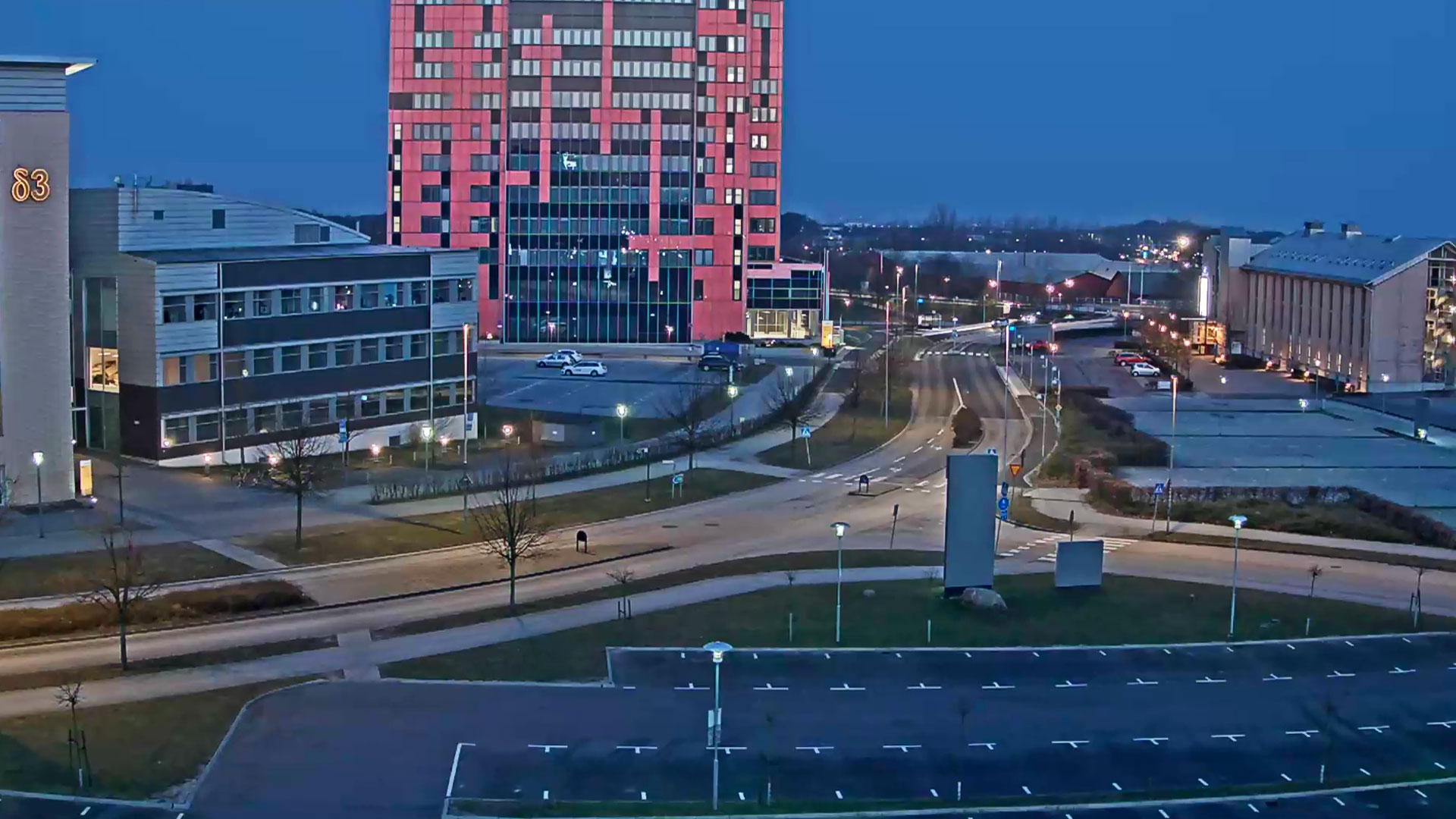
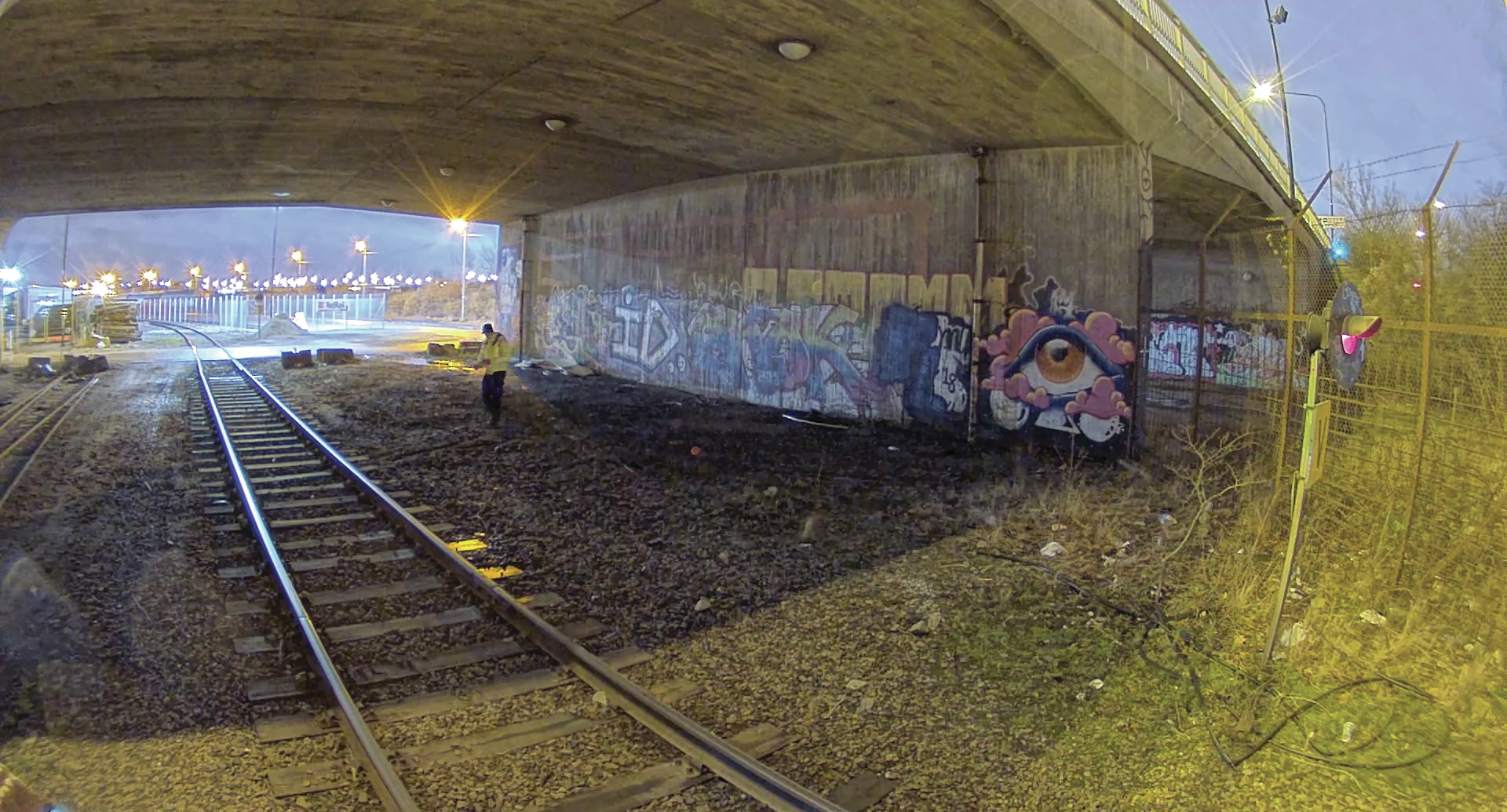 |  |
| Lightfinder 2.0 | Human eyesight |
Video snapshots comparing a scene filmed with a Lightfinder 2.0 camera and a manipulated view to show what people at the scene could see. The person under the bridge is measuring the light level to be 0.05 lux.
The impact of shorter exposure time
Exposure time is the period during which the camera sensor captures photons. They are converted to electrons and the accumulated electron count for each pixel is measured and used to form an image. All sensor pixels are then emptied of electrons, and the photon capturing starts again. Low-light scenes generally require longer exposure times for the sensor to capture enough photons to produce a usable image, but Lightfinder enables a shorter exposure time. If the exposure time is too short and the image becomes too dark, it’s possible to brighten it digitally, but not without increasing the visual noise.
The impact of a larger lens aperture
In low light, you typically need a larger lens aperture to be able to collect enough light during exposure. Due to how optics and ray-tracing work, the larger aperture comes with the drawback of a shorter depth of field, which means that a shorter part of the scene is in focus. But thanks to the increased light sensitivity with Lightfinder, a smaller aperture can be used, which allows for a greater depth of field without too much visual noise.
See color in low light
In very low light, where other day-and-night cameras switch to night mode and grayscale video, cameras with Lightfinder stay in day mode to deliver continuous color video. This color detail can be vital in surveillance. By enabling operators to report specifics, such as the color of a car or a jacket, Lightfinder facilitates faster response times and more precise identification.
Examples at different light levels
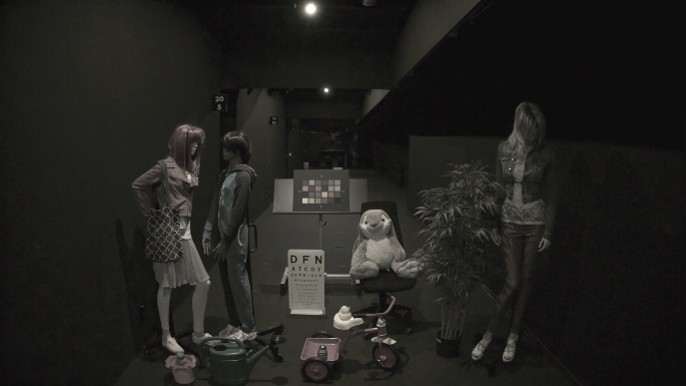
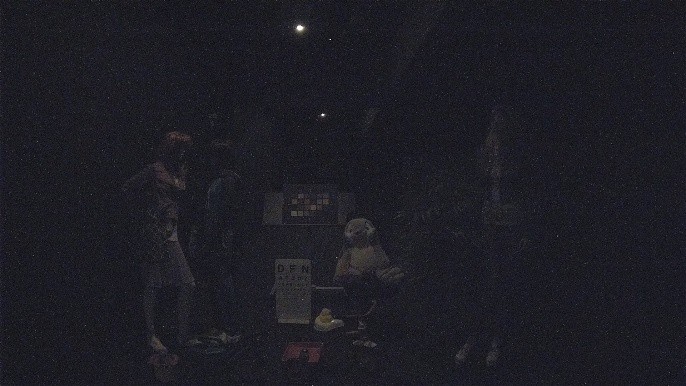
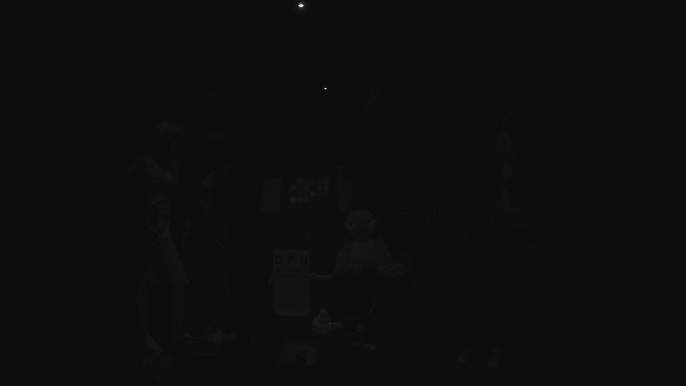
To exemplify the ability to reproduce color in low light, this section includes images from video sequences filmed by cameras with Lightfinder in a studio with extremely well-controlled lighting.
The comparison includes three cameras:
a camera with Lightfinder 2.0 (AXIS Q1726 with F1.1 lens)
a camera with Lightfinder (AXIS M2035 with F1.4 lens)
a third camera set to mimic how dark the scene appears to the human eye
The cameras were positioned 2-3 m from an arrangement of mannequins and colorful objects.
Note: Ideally, a camera's light sensitivity should be judged when there is movement in the scene, which is not the case here as still images are used to present the difference. The images have been scaled down, and viewing monitor or print quality may also affect how the images are perceived.
Lightfinder at 1-1.6 lux
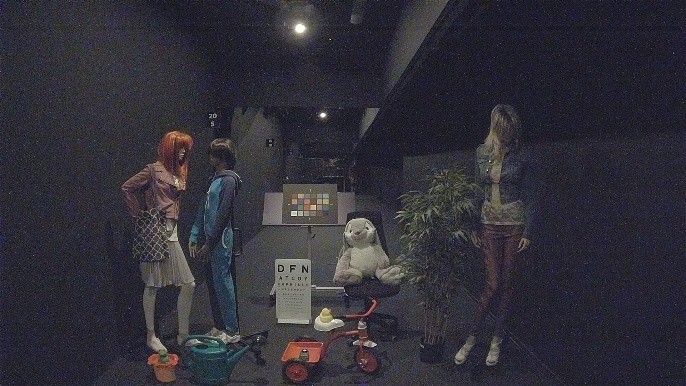
The scene had light levels between 1 lux (on the tricycle) and 1.6 lux (at mannequin waist height).
 |  |
| Lightfinder 2.0 | Lightfinder |
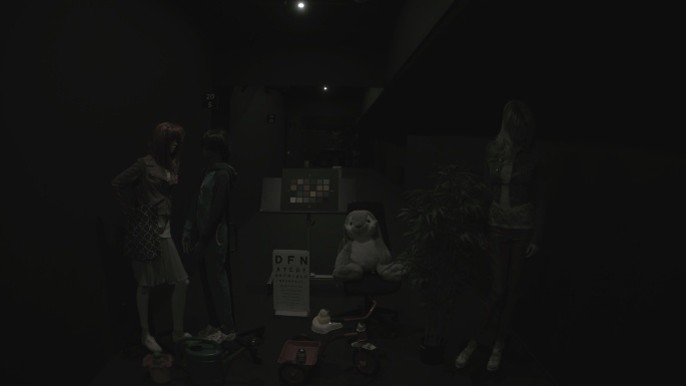
The Lightfinder 2.0 camera delivered clear colors and a bright image.
The Lightfinder camera delivered discernible colors and some grain noise.
The human eye perceived the scene as being very dark.
Lightfinder at 0.11-0.17 lux
The scene had light levels between 0.11 lux (on the tricycle) and 0.17 lux (at mannequin waist height).
 |  |
| Lightfinder 2.0 | Lightfinder |
The Lightfinder 2.0 camera delivered muted colors. All objects can still be seen, even in the background.
The Lightfinder camera delivered a shadowy, grainy, color image. The objects in the foreground can be discerned.
The human eye perceived the scene as being pitch-black and no objects can be seen.
Capture movement
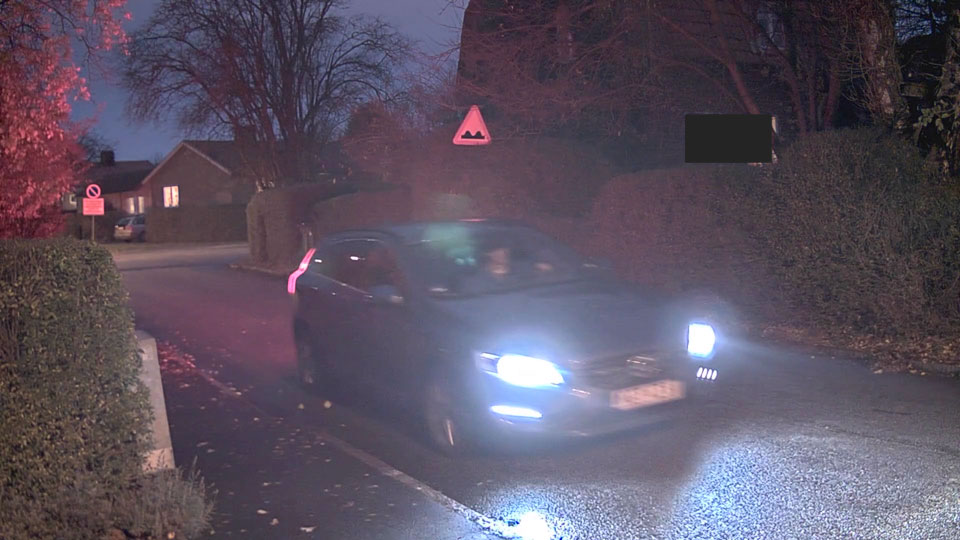
Motion blur is a common problem in scenes with limited light, where you typically need a long exposure time. The phenomenon occurs when the shutter speed is too slow to 'freeze' a moving object, causing its image to be distributed across multiple pixels during the exposure interval. If the scene allows, you can reduce motion blur by placing the camera further away from the moving object or using a wide-angle lens. This will make the object move over a smaller number of pixels on the image sensor.
Lightfinder reduces motion blur by allowing for shorter exposure times. It lets you view frozen frames with very little blur, making it easier to identify people or vehicles and assess incidents.
Reduce storage and power consumption
Lightfinder gives clear, reliable color images without the need for external LEDs or additional lighting. Together with other light-optimizing technologies from Axis, Lightfinder can help you save energy and reduce light pollution.
Axis Lightfinder and Axis Zipstream technologies are designed to work together to apply compression in a way that preserves important image details while keeping average bitrates low. This reduces your storage costs and further improves the sustainability of the surveillance solution.
Lightfinder 2.0
An increasing number of Axis cameras use Lightfinder 2.0. This evolution of Lightfinder is available on most cameras with the proprietary system-on-chip ARTPEC-7 and later ARTPEC versions.
Due to a complete redesign of the image processing pipeline, Lightfinder 2.0 provides even sharper images with less artifacts. In addition to improving the general light sensitivity of the camera, it enables more accurate color reproduction, improved white balance, and increased possibilities to lift shadows and dark objects. Lightfinder 2.0 also comes with new settings for controlling temporal and spatial filtering. This is especially valuable for advanced users who need to optimize the image for specific video analytics.